Sunday, October 11, 2015
Baseball & The Relation between Father & Son: BaseballBlog: 001 ...
Baseball & The Relation between Father & Son: BaseballBlog: 001 ...: Baseball Blog: 001 By: Chris Rosenwasser Baseball & The Relationship between Father & Son ...


Sunday, September 13, 2015
Beltline Beauty: Atlanta's Lantern Parade
Today’s List:
1. You must enter Atlanta's lantern parade into your 2016 calendar immediately.
2. If you won’t
be in Atlanta the second Saturday of September 2016, check to see if there is a lantern parade somewhere nearby. Or, start one.


I was at the
2015 Lantern Parade in Atlanta last night, sitting on the last leg of the route.
I was cracking neon jewelry for the three pre-k’s I was with and chatting with
their parents who were trying to keep the paper lanterns we made on the sticks
that held them. Not an easy task because when wielded by a three-year-old these
things become weapons. However, since everyone is getting stuck by someone else’s
lantern pole, it makes for a merriness.
In fact, the
whole night was riddled with glee. Well, not the moment when two of the pre-k’s
lost their helium balloons, but certainly the rest of it.
Across the
Beltline path from us a small combo played Baby Boomer hits while the night fell. The pre-K’s danced
in neon abandon and we all scurried about trying to corral them into a limited
space as the crowds arrived. Then the moon came up, the stars came out, and the glow of a community
of light surrounding us pulsed with that wonderful hum of a city at play.
 And trust me,
Atlantans came out to play on the Beltline last night. We saw jellyfish lanterns
and Hindenburg lanterns; Minion, Madonna, and makeshift lanterns. We saw people
strung up, down, and around with twinkling lights; Segways in neon glory; a group
setting off beaming, flying saucers in unison; people tossing glowing Frisbees back
and forth from the path to the overpass. We saw neon dreadlocks, neon footwear, neon signs, and neon nonsense. We saw half-naked women walk by
painted in body glow wonder.
And trust me,
Atlantans came out to play on the Beltline last night. We saw jellyfish lanterns
and Hindenburg lanterns; Minion, Madonna, and makeshift lanterns. We saw people
strung up, down, and around with twinkling lights; Segways in neon glory; a group
setting off beaming, flying saucers in unison; people tossing glowing Frisbees back
and forth from the path to the overpass. We saw neon dreadlocks, neon footwear, neon signs, and neon nonsense. We saw half-naked women walk by
painted in body glow wonder.
And then the parade reached us.
It was led by the brightly lit and legendary Atlanta marching band, The Abominables. Twinkling umbrellas twirled, gleaming trombones blared, and a glowing pumpkin head conducted. What followed was a stream of people having a great deal of fun while filling some more people with a great deal of delight.
Bravo, Atlanta,
what a spectacle of home-made beauty! Families paraded with themed
lanterns, pulling neon bedecked kids in red wagons, followed by friends with flashing lasers, and neighbors in neon hats. There were two enormous, flowing
white birds, so airy their wings kissed our cheeks as they passed to ooohs and
ahhhs of every caliber. We applauded, we cheered, and we even got a
little teary.
The softness of the lanterns floating on the first crisp wafts of fall was just the right touch for the summer weary and wobegeone among us. We all came to
that parade last night with some weight burdening our neon glow – from lost
balloons to lost youth; lost hope to lost faith; lost health to lost love. But somehow
when the night fell, the pooled light of all that creativity infused us with a profound
truth. Together, we can light the way. Together, Atlanta did it last night.
Suzanne McLain Rosenwasser is the author of several books:
Suzanne McLain Rosenwasser is the author of several books:
 |
| Order paperbacks or ebooks at all online sellers or click here for Amazon orders: http://amazon.com/author/suzannerosenwasser Visit: http//:www.suzannerosenwasser.com |
Saturday, August 22, 2015
My 50th High School Reunion. Seriously.
My 50th high school reunion is this year.
I'm sure everyone who utters this statement feels the same lack of belief that I do.
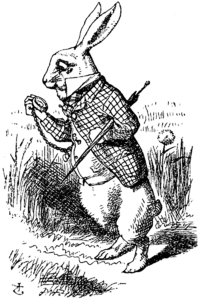 I remember running into a group of 50th reunion revelers when I was in college. I was with some of my Long Island high school friends in a Boston bar on Commonwealth Avenue. We were surprised to find our hangout was filled with old people whose hangout this had been once. They sought us out, bought us drinks, and told us stories of their student days in Boston, around 1914. Fossils, right? I don't remember any of the stories, but one of the guys I was with started calling our elders "White Rabbits."
(As a refresher the reference is to Lewis Carroll who described the
White Rabbit as "elderly, feeble, timid, and nervously shillyshallying.")
Fifty years later the White Rabbits of that evening reappear in my mind's eye, but I don't see myself or my high school friends among them - and I'm sure those White Rabbits didn't see us as we saw them.
I wonder how 50 years will look on the expressions of my school friends when I see them - many for the first time since 1965? The classmates I've seen regularly over the years haven't aged a bit from my perspective. Oh, when I first see them coming towards me, maybe, but five minutes into a conversation and nothing has changed. We've shared youth and energy for so long - some of us since Kindergarten - that it is part of who we are when we're together.
What amazes me is that same feeling has come through the telephone when I've talked to long-lost friends about our upcoming reunion. I don't know what they look like these days, since we're not on face-time nor are we facebook friends, so it's the voice that triggers the link. There's no "quavering," no "shilly-shallying." It's just as we always were.
 Of course, the changes show through: We aren't discriminatory about who our friends are any more. We suffer deep pauses to honor the trials of our lives. We overuse the phrase: "Remember when...." We recall that since our last reunion in 1997, dear ones have died, long marriages have ended, and a multitude of grandchildren have been born.
But all of that fades away when we allow ourselves the luxury of settling back into the friendship and fun of high school, turning the sturm and drang of it into humor because we were teenagers then, and we also went to a Catholic school where boys and girls attended classes in separate buildings after 8th grade commencement.
However, in our town, we are fortunate to have a unifying element: The Tender Bar, made famous in JR Moehringer's memoir of the same title. The bar, now known as Edison's, was called Gino's in our iteration of the same place. Today, the bar hosts nearly every Friday night open house for Manhasset's public and parochial school reunions. The layout is exactly the same, and if the music is right, Baby Boomers will be able to imagine "Gary and the Wombats" playing in the back room while we dance away the years into memories.
These will comprise:
Performing at or going to the New York World's Fair; imitating the Rolling Stones for a school review; hearing a gifted classmate sing "Let There Be Peace on Earth."

Someone will bring up the trip to Notre Dame University; a religious retreat to eastern Long Island; basketball games followed by sock hops in the boys' gym; cross country; baseball; cheerleading; the Tumbling Team; the Magnificat; the Recordare, and the demerits we got for being "out of uniform." Oh, and a most important fact: The 1965 Girls' School Sports' Night ended in an unprecedented Blue and White tie.
So, for full disclosure, I wasn't going to go to this reunion until the other day when a friend since Kindergarten called and said: "How many chances are we going to get to go to a 50th reunion?"
I realized she was right. I wasn't a huge fan of high school itself, (although I taught in the field for 25 years), but I loved the people in that little micro-cosm of life. The girl in homeroom who sat in front of me from Kindergarten through 12th grade. The boy at my first sock hop who asked me to dance. Al, the crossing guard at Northern Boulevard who joked us across the street ("Yackety-Yak"). George at Town Hall Pharmacy who made us prove we had money before letting us in the door. The parents who let us drive their convertibles under starlit skies from Shore Road to Sands Point and back again. The bouncers who let us into Gaffney's, My Father's Place, the Jaunting Car Pub, and the Scratch. The bartender in Gino's who announced my mother had just called to say: "Come home, now!"
I've decided I want to remember these things with the Class of 1965, the kids who went off to college in full prep school dress, only to return at Christmas in blue jeans and tie-dyed shirts. The ones who went off to pursue a religious life. The ones who went off to war. The ones who became poets, parents, and professors; lawyers, sales reps, doctors, traders, realtors, and heroes. All of us. For this is a chance to look at who we were then, who we are now, and the distance in between - a view that doesn't come often in life.
*****
Also, the Friday night
get-together will be November 6, 2015, beginning at 7:30 (pay as you go) at
Edison’s (the old Gino’s). One of the beauties of public or private school in
Manhasset is we knew each other through siblings and friends. So if you’re a
sibling or friend of the Class of ’65, come to the Tender Bar on November 6th.
It would be so great to see you.
***
Suzanne McLain Rosenwasser is the author of several books:
***
Suzanne McLain Rosenwasser is the author of several books:
|
| Order paperbacks or ebooks at all online sellers or click here for Amazon orders: http://amazon.com/author/suzannerosenwasser Visit: http//:www.suzannerosenwasser.com |
Tuesday, July 28, 2015
Oakland Cemetery Atlanta: Penetrating Stillness

Oakland Cemetery sits in an eerie silence. It’s July, the resting souls are summer-cloaked by huge oak and magnolia trees that mute the bustle of southeast Atlanta which surrounds Oakland’s many acres. It is a quiet unlike any I’ve heard and its penetrating stillness keeps returning to me long after my visit.

The disassociated silence could be so many things because this Victorian memorial site is unlike any of the many burial grounds I have visited. It is a time capsule adorned in the garden traditions of its own period with a studied look into the Confederacy, 19th century Jewish rites, aristocratic Atlantan burial plots, and the resting places of slaves and paupers. In fact, the visual history of Oakland is so thick that the more modern gravesites, like those of golfer Bobby Jones and Mayor Maynard Jackson, seem out of place.
A main attraction of Oakland is how accessible it is. People are obviously using its beautiful, sometimes age-crumbled, pathways for contemplative walks or serious runs connected to Atlanta’s Beltline. Others are just strolling around, reading gravestones randomly. We went on a tour. Actually we went on two tours. It was hot, but it was too interesting to leave. That’s Jasper “Jack” Smith who sits at the entrance to the oldest burial plots in Oakland.

His is one of 55 mausolea within the "park," which is what Victorians liked to call their burial gardens. Here the Vics wanted living relatives to enjoy themselves while honoring the memories of their dead. They shared picnics, pruned exotic plants, and lazed away long afternoons among the groomed plots of their neighbors and the “residents” of Oakland, as the guide called the 70,000 spending eternity here.
Garden cemeteries were a fairly new idea when the city fathers of Atlanta purchased grounds for Oakland in 1850. Prior to this, burials took place in family plots or churchyards where the the most favored sites faced east so the dead could be assured of being on the right side of the sun on Judgment Day. Souls of lesser importance – like bastards, the stillborn, suicides, and strangers - were generally buried in the northern corner of a yard, far from the sight of redemption (prairieghost.com/cemeteryhistory).
Large, pubic graveyards didn’t exist in the United States (or Europe) until 1831. Mount Auburn Cemetery in Cambridge, Massachusetts launched the movement, according to Keith Eggener ‘s book Cemeteries. The professor of American art and architecture (University of Missouri) reports that the Transcendentalists of the time were “fascinated by burial grounds, by the coming together of these disparate states of life and death, nature and culture.”
Like Eggener, I am attracted to cemeteries, (see previous blog), and I’ve loved the Transcendentalists since I first met them in a college class in Boston a long time ago, so I’m delighted it is they who cultivated the idea of the “rural cemetery park.” According to the professor’s history, the concept preceded all public spaces - recreational ones, as well as art museums or even botanical gardens. Consequently, when rural cemeteries opened in the 1830s, the living were drawn by their green stretches of horticultural magnificence amid artistic sculptures in locations apart from the city.
All of this is evident at Oakland where tireless volunteers, even on the hottest of days, tell visitors as many spirit stories as the allotted time allows. One of my favorites is the record of a letter held by the custodians of Oakland. It was written to the parents of a dead Confederate soldier from a different state. The missive tells the family that their son’s stone is supported by a magnolia sapling. Today the marker leans against the massive trunk of a 150-year-old tree, pictured below:

The last plots in Oakland were sold in 1884, but there are still regular burials today and those, too, come with interesting stories. Consider the gravesite of Ollivette Eugenia Smith Allison (1923-2010) who was the executive director of Carrie Steele-Pitts Home for years. The first residence for Atlanta’s black orphans was founded in 1888 by Carrie Steele who, when working as a maid in Union Station, was astonished by the number of black babies abandoned there. Decades later, Ollivette Allison came to the home as a 12-year-old orphan and never left. She became known as “Great Mother.” Her monument is adorned with an elephant because elephants never abandon orphaned calves, but immediately accept them into the fold. Ms. Allison did this for an estimated 5,000 babies over the course of her career.

There are symbolic touches like this all around Oakland. They may be in a memorial depicting a cut tree trunk, indicating a life cut short in youth or in a tall arch, representing one's soul being at death's door to paradise. There are also symbols of the times - like a hitching post at a corner, black iron with a wrought ring to hold a horse's harness or a stepping stone near the wall of a family's gravesite, placed there for the visitors to disembark easily from their carriages.

The Transcendentalists of the 1830s said that garden cemeteries brought death into life. Oakland brings the deaths and the lives of Victorians to the forefront in ways that one can experience few other places.
***
Suzanne McLain Rosenwasser is the author of several books:
|
| Click below to order paperbacks or ebooks http://www.amazon.com/Suzanne-McLain-Rosenwasser/e/B006ZC9R7Y/ref=dp_byline_cont_pop_ebooks_1 |
Subscribe to:
Posts (Atom)